
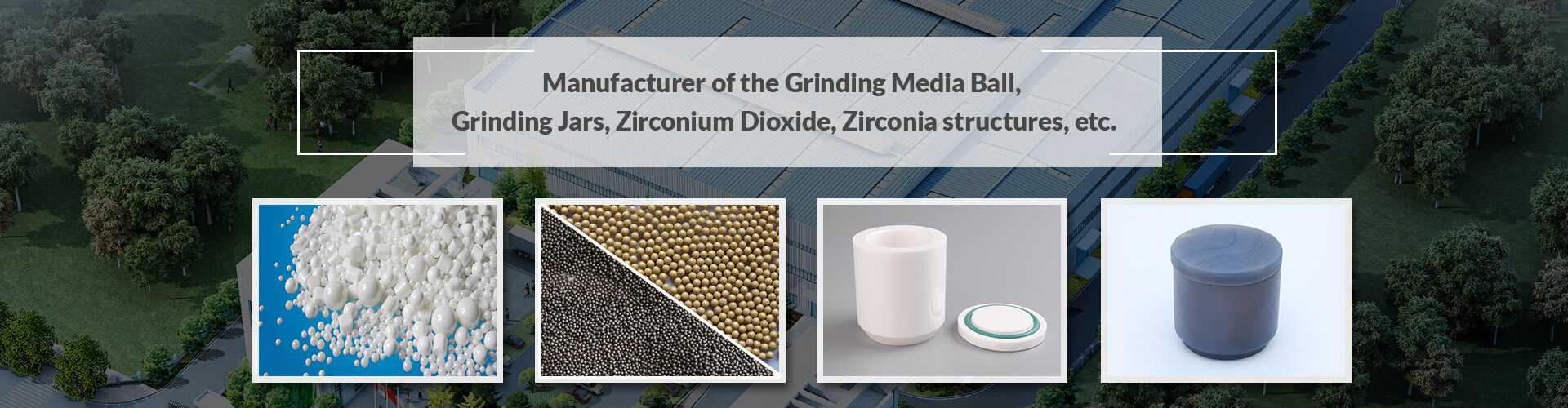
In the experiment, the planetary ball mill is the most advanced grinding equipment. It can grind samples. The product is equipped with 4 vacuum ball mill tanks, which can be tested under inert gas. The product is small in size, high in power, low in sound, and environmentally friendly.
Several main assessment indicators of planetary ball mill:
1. Rotation speed
Rotation speed is an important index of the planetary ball mill. To make the material finer and faster, you should choose an appropriate speed.
2. Maximum continuous working time
The production of sub-micron or nano-materials with planetary ball mills often requires the equipment to work continuously for more than 50 hours at full load, and strive to keep the process conditions (such as rotational speed) unchanged.
3. Repeatability
For the same material and the same process, the results of repeated ball milling are required to be completely consistent. It can be achieved with gear transmission, but cannot be achieved with belt transmission.
4. Consistency
For the same material and the same process, the grinding results of two or four cans are required to be exactly the same, which can be achieved by gear transmission, but it is difficult to use belt transmission.
5. Speed ratio: The speed ratio between revolution and rotation is a technical performance index of the planetary ball mill. This parameter has a close and complicated relationship with the speed, grinding time and other factors. In order to allow users to reduce the influencing factors and simplify the process conditions in the test, the technicians of our factory have undergone a lot of repeated comparison tests in the process of developing the planetary mill, and finally selected 1:2 (≤4L) and 1:1.5 (≥12L) ) Is the best speed ratio (this is basically consistent with the speed ratio of the imported planetary mill). For the majority of users, the trial and exploration in this work are eliminated, and a lot of valuable time is saved.
6 Noise In the state of no-load high-speed rotation, the noise of the belt rotation is 66dB, and the noise of the gear drive is 68dB, but in the full-load working state, the noise of the two transmissions is the same, both are 75dB. This is mainly the sound of grinding ball materials colliding with each other and grinding. Because only the noise under load is meaningful, the noise effect of belt drive and gear drive is the same.


