
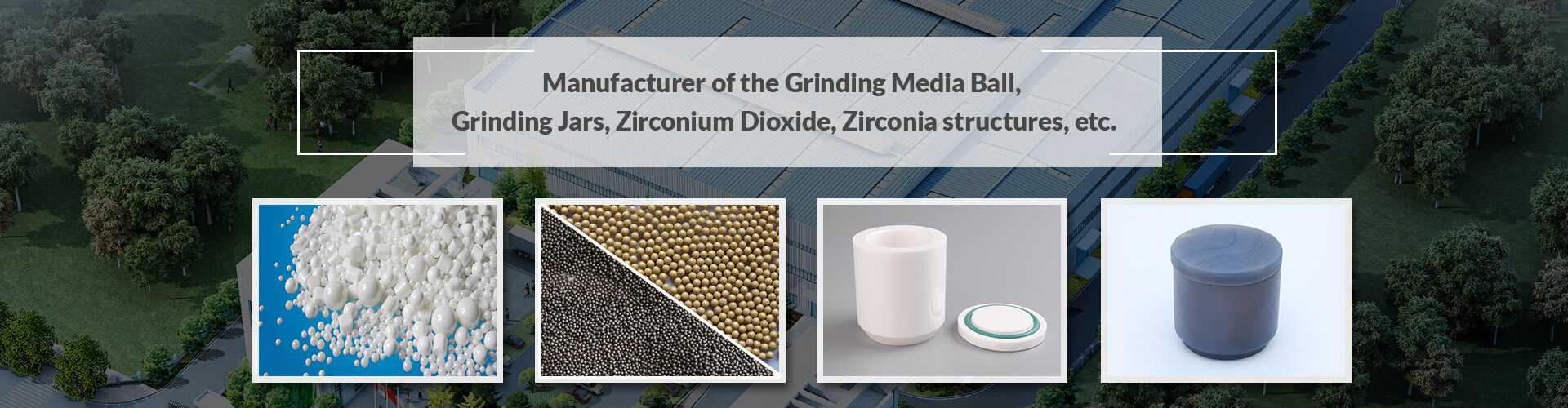
Zirconia ceramic balls have high strength and toughness, good wear resistance, high temperature and corrosion resistance, high rigidity, non-magnetic permeability and normal temperature electrical insulation. When the zirconia ceramic ball is at 600°C, the strength and hardness of the zirconia ceramic ball are basically unchanged, and the density is 6.00 g/cm3. The coefficient of thermal expansion is close to that of metal. Zirconia ceramic balls can be used in combination with metals if the thermal expansion coefficient is close to that of metals. Suitable for bearings, seals, etc. High-purity zirconia beads are currently the most ideal grinding media. It has been widely used in the ultra-fine crushing and dispersion of non-metallic minerals, coatings, inks, paints, dyes, titanium dioxide, pesticides, magnetic materials and other industrial materials.
The main technical parameters
Zirconia content True density Bulk density Bending strength Fracture toughness Hardness 97% >6.0/cm3 3.7g/cm3 ≥1000MPa
12-14Mpa. m1/2≥90
Specification (mm): φ0.1,φ0.2,φ0.3,φ0.4-0.5,φ0.4-0.6, 0.8-1.0 1.0-1.2 1.2-1.4 1.4-1.6 1.6-2.0 2.0-2.5 2.5-3.0 5-5.5 6-6.57-7.5 10-10.5,12-50mm,etc
Main performance
High grinding efficiency: The specific gravity of TZP zirconia ceramic microbeads stabilized by yttria is 1.6 times that of ordinary zirconia microbeads, and the grinding efficiency is higher under the same conditions. Good fluidity: the product has good roundness and smooth surface, and the wear of the zirconia ceramic ball to the equipment is lower than other grinding media. Impact resistance, low abrasion: TZP zirconia ceramic microbeads have good toughness, and do not crack or flake in high-speed, high-concentration machines. The wear is only 2/1 of zirconium silicate microbeads. Low use cost: Selecting this product will definitely reduce the overall cost, such as media wear, power consumption, labor, equipment, etc. Greatly improve product quality.


