
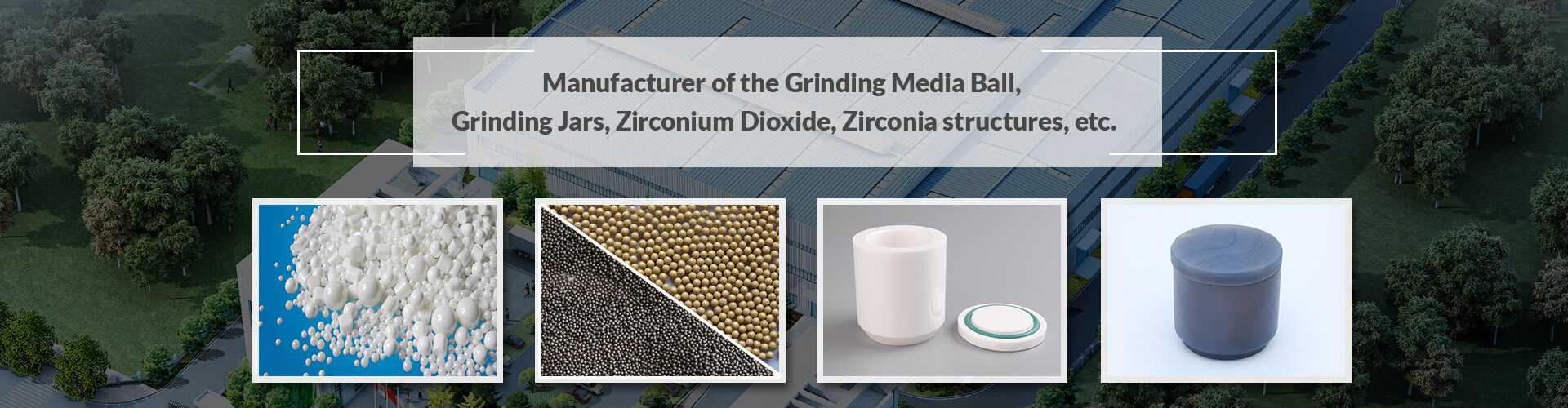
Zirconia beads are also called TZP zirconia beads, which do not pollute the material and can be used for nano-scale grinding. Zirconia beads are suitable for different industries and are widely used.
According to the content of zirconia, zirconia beads can be divided into:
1. 65 zirconia beads, also known as zirconium silicate beads.
After the zirconium silicate is fired, the chemical and physical stability is improved, and the hardness of the glaze surface of the zirconia beads and the bonding performance to the glaze are improved. In order to improve the whitening effect, the particle size distribution of ZrSiO4 is required to be relatively high during production. For example, Korea Sano controls the particle size distribution of zirconium silicate within a relatively narrow range, which can make the color very white.
2. 80 zirconia beads, also known as zirconium-aluminum composite beads.
80 zirconia beads are made of zirconia powder and alumina powder by titration rolling and sintering, so that the sphericity and density are improved.
3. 95 zirconia beads, also known as yttrium stabilized zirconia beads, also known as yttrium zirconia beads.
95 zirconia beads have high strength, hardness and wear resistance, non-toxic, suitable for high shear sand mills, sintered with yttrium oxide as stabilizer, low wear, high grinding efficiency, suitable for high viscosity and wet grinding Occasionally, if the cost performance is relatively high, yttrium-stabilized zirconia beads can be selected, which have a long service life, so the cost investment is low.
4. Cerium stabilized zirconia beads, also known as cerium zirconia beads
Cerium zirconium beads are made of 80% zirconia and 20% yttrium oxide. The grinding efficiency is six times that of glass beads, 2 times that of zirconium silicate beads, and the wear resistance is 26-46 times that of glass beads. 5 times that of acid zirconium beads. It is suitable for grinding slurry with high viscosity and high hardness.


